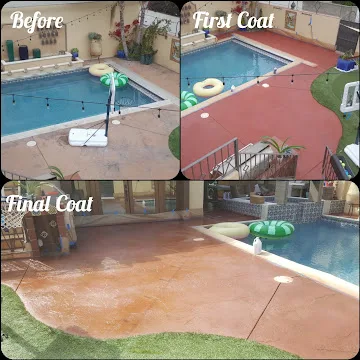
Orange County concrete restoration
Building Restoration Services and Concrete Restoration in Orange County, California
Certified for this work

Concrete restoration is structural repair for slabs that are settling, cracking, or losing surface to spalling. We diagnose the cause first, then fix it on driveways, pool decks, walkways, and patios across Orange County.
Most calls come from homeowners in San Clemente, Anaheim Hills, and Ladera Ranch who keep patching the same crack every winter or watching pool deck rebar push through the surface. We tell you on the first visit whether the slab is worth saving or whether replacement is the honest answer.
years in construction and surface work
Google rating from local customers
California contractor license
Google reviews
Trust has to show up before the estimate.
5.0
Google rating from local customers
17
Google reviews and counting
Victoria
Orange County
★★★★★
"Our kitchen counter was pitted from water damage. Vince and Derrick fixed the granite and sealed everything at a reasonable price."
Google reviewJohn D.
Orange County
★★★★★
"Concrete patio, tile walkways, and driveway. Cleaning, patching, recoloring. Three days, and they aced it all."
Google reviewJudi Harris
Orange County
★★★★★
"Honest, hard working. Vince and Gio were punctual, neat, and surpassed our expectations."
Google reviewFrank Warren
Laguna Niguel
★★★★★
"Driveway was getting cloudy and chipping. Vince came out multiple times and even made a video showing me how to maintain it."
Google reviewMike Porter
Orange County
★★★★★
"Competitive quote, owner was hands-on the entire time, fixed every detail we pointed out."
Google reviewLaurie C.
Orange County
★★★★★
"Concrete restored and stained. Vince and his crew were professional, reliable, and always on time."
Google reviewMission Viejo location
Concrete Restoration from a local Orange County crew.
We are based at 23881 Via Fabricante, Suite 521 in Mission Viejo. Most concrete restoration work happens nearby in Lake Forest, Laguna Niguel, Rancho Santa Margarita, Irvine, Newport Beach, San Clemente, Tustin, and homes across Orange County.
Read the Google reviews on this page before you decide who should look at your surface.
What we do
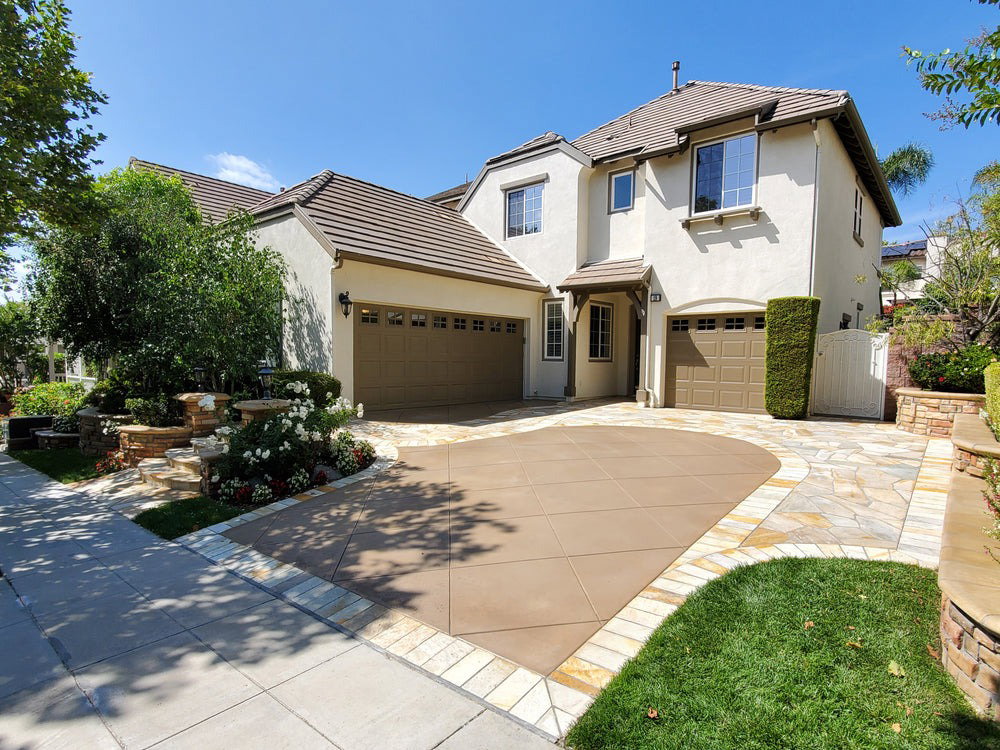
Fix the cause, not the symptom.
A crack that keeps coming back is moving. The slab has settled, the rebar is rusting, or water is undermining the base. Patching the surface again will just hide it for another season.
We use polyurethane foam to lift sunken slabs back to grade, structural epoxy or flexible polyurethane in cracks depending on whether they are dormant or active, and polymer-modified mortar to rebuild spalled areas after treating exposed rebar.
The difference
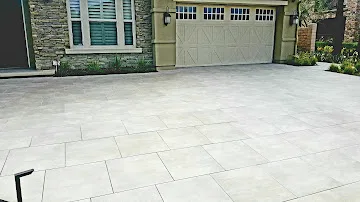
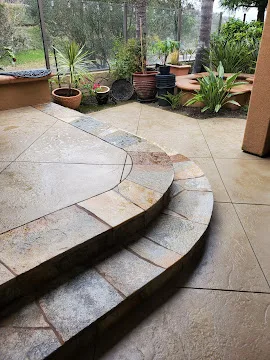
Restoration is the alternative to demolition and replacement.
Real restoration usually runs less than tear-out and pour, and the slab is back in service the same day on most lifting jobs. The original concrete stays in place.
When the slab is too far gone, deep structural cracks across the whole panel, severe spalling, or lost compressive strength, we say so. The honest call is sometimes replacement.
Learn your surface
The better you understand the material, the better it holds up.
Quick reads on how concrete restoration actually works for orange county homes, before you spend money on the wrong fix.
Polyurethane foam slab lifting and leveling.
Structural epoxy injection for dormant cracks.
Flexible polyurethane for active cracks.
Spall and rebar repair on coastal pool decks.
Joint and expansion seal restoration.
Penetrating sealer over completed repairs.
How we work
A clear plan before the machines come out.
01
Assessment and root-cause diagnosis
We walk the slab, measure elevation changes, look at crack patterns, check for hollow areas under settled sections, and identify what is causing the damage. Soil settlement, rebar corrosion, water infiltration, and tree roots all need different fixes. We tell you what is actually happening before we quote the work.
02
Lifting and stabilization
For settled slabs, we drill small ports through the concrete and inject expanding polyurethane foam underneath. The foam fills voids and lifts the slab back to grade in real time, so we level it precisely as we go. The injection holes get patched with color-matched mortar.
03
Crack and spall repair
Dormant cracks get injected with low-viscosity structural epoxy that bonds the slab back together. Active cracks get polyurethane that stays flexible. Spalled surfaces are chipped back to sound concrete, exposed rebar gets cleaned and treated with a corrosion-inhibiting primer, then rebuilt with polymer-modified repair mortar to the original profile.
04
Surface finish and seal
Repaired areas are ground flush with the surrounding slab and finished to match the existing texture. A penetrating sealer or breathable coating goes on top to slow future moisture intrusion. We document the work with before and after photos so you know exactly what was done.
Orange County homes
Concrete restoration for Orange County homes.
Hillside neighborhoods around San Clemente, Dana Point, Laguna Niguel, and Mission Viejo have a lot of older slabs that have dropped because of soil settlement. We lift those back to grade with polyurethane foam, no demolition and no fresh pour.
Coastal homes in Newport Beach, Corona del Mar, and Laguna Beach see chloride attack on rebar, which is why pool decks spall and balconies flake. Inland in Yorba Linda, Anaheim Hills, and Ladera Ranch we see more crack injection work from seasonal expansion and contraction on aging concrete.
Questions
Straight answers before the estimate.
Is restoration cheaper than replacing the concrete?
In most cases, yes. Restoration runs less than tear-out and replacement, and you avoid the disruption of a driveway demo and pour. The honest exception is concrete that is too far gone, deep structural cracks across the whole slab, severe spalling that has consumed much of the surface, or a slab that has lost compressive strength from age and exposure. In those cases, replacement is the right call and we tell you that.
How does polyurethane foam slab lifting work?
We drill small ports through the slab where it has settled. A two-part polyurethane foam is injected underneath. The foam expands quickly, fills any voids in the soil, and lifts the slab back to grade. We control the lift in real time with laser levels and stop when the slab is back where it should be. The cured foam is waterproof, will not break down, and supports the slab long term. Slab is back in service in about an hour.
What causes my driveway or patio to settle?
A few usual suspects in Orange County. Cut-and-fill soil from the original grading has compressed unevenly, common in hillside neighborhoods built on graded lots. Water from downspouts, irrigation, or pool leaks has eroded the soil under the slab. Or the original sub-base was not properly compacted before the concrete was poured, which is common in older tract homes. We probe the voids during inspection to see which one you have, because the foam lift fixes the slab but you may still need to address the water source or drainage to keep it from settling again.
Why is my pool deck spalling and showing rebar?
Chloride attack on the rebar. Salt from pool water, ocean spray, and even hard tap water carries chloride ions that penetrate concrete over time. When the chloride reaches the rebar, the steel rusts. Rust takes up much more volume than the original steel, so as it expands, it pushes the concrete above it off in flakes. The fix is to chip back to sound concrete, treat the exposed rebar with a corrosion-inhibiting primer, and rebuild with a polymer-modified repair mortar bonded to the surrounding slab. Skipping the rebar treatment means the spalling comes back.
Can you fix a crack that keeps coming back?
Yes, if we treat the cause and not just the symptom. A crack that returns is moving, either because the slab is still settling, the joints are not located right, or there is no isolation between the slab and a fixed structure. We inject the crack with flexible polyurethane (which moves with the slab instead of breaking) or, if the slab is still settling, we lift and stabilize first, then inject. A crack patched with rigid epoxy on a moving slab will just open up again next to the patch. Most cosmetic patch jobs we see have failed for that reason.
How long does restoration last?
Polyurethane slab lifting is long lasting. The foam is hydrophobic, does not break down, and supports the slab as long as the concrete itself holds together. Crack injections hold up well if the underlying movement is addressed. Spalling repairs hold up on coastal pool decks if rebar treatment was thorough, longer inland. We warranty our structural work and stand behind it.
Do I need permits for concrete restoration?
Most residential restoration work in Orange County does not require a permit because we are repairing an existing slab, not pouring new concrete or changing the structural footprint. Crack injection, slab lifting, and spall repair are all maintenance work. If the project includes replacing a section of slab, adding new concrete, or working on anything load-bearing for a structure, we pull the permits and handle the inspection. We are licensed (CSLB #661604) and pull whatever the city requires.
Related
Other building restoration services in Orange County.
Building Restoration
Pool Deck Restoration
Pool deck restoration in Orange County, California for travertine, stone, and concrete pool decks. Cleaning, sealing, and coping restoration that brings the surface around your pool back without a tear-out.
Building Restoration
Construction cleanup
Construction cleanup in Orange County, California for new builds and remodels. Paint, grout haze, overspray, and finish damage cleared off the floor before move-in.
Building Restoration
Hole Filling
Hole filling in Orange County, California for travertine, concrete, and natural stone. Color-matched fills and refinishing so the repair blends with the surrounding surface.
Have a concrete restoration project you are not sure about?
Send a photo. We will tell you what we see and whether it belongs on our schedule.