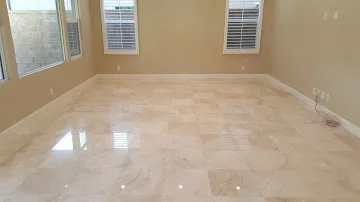
Orange County hole filling
Building Restoration Services and Hole Filling in Orange County, California
Certified for this work

Hole filling is what travertine, limestone, and concrete floors need once the original factory fill cracks out and the open voids start collecting dirt. We refill them with color-matched epoxy that bonds to the stone and outlasts the cementitious paste underneath, then grind flush across Orange County.
Most calls come from homeowners in Mission Viejo, Coto de Caza, and Newport Beach with older travertine floors that look pitted on the kitchen aisle and dark in the entry. Pool deck pavers in coastal homes are usually next on the list.
years in construction and surface work
Google rating from local customers
California contractor license
Google reviews
Trust has to show up before the estimate.
5.0
Google rating from local customers
17
Google reviews and counting
Victoria
Orange County
★★★★★
"Our kitchen counter was pitted from water damage. Vince and Derrick fixed the granite and sealed everything at a reasonable price."
Google reviewJohn D.
Orange County
★★★★★
"Concrete patio, tile walkways, and driveway. Cleaning, patching, recoloring. Three days, and they aced it all."
Google reviewJudi Harris
Orange County
★★★★★
"Honest, hard working. Vince and Gio were punctual, neat, and surpassed our expectations."
Google reviewFrank Warren
Laguna Niguel
★★★★★
"Driveway was getting cloudy and chipping. Vince came out multiple times and even made a video showing me how to maintain it."
Google reviewMike Porter
Orange County
★★★★★
"Competitive quote, owner was hands-on the entire time, fixed every detail we pointed out."
Google reviewLaurie C.
Orange County
★★★★★
"Concrete restored and stained. Vince and his crew were professional, reliable, and always on time."
Google reviewMission Viejo location
Hole Filling from a local Orange County crew.
We are based at 23881 Via Fabricante, Suite 521 in Mission Viejo. Most hole filling work happens nearby in Lake Forest, Laguna Niguel, Rancho Santa Margarita, Irvine, Newport Beach, San Clemente, Tustin, and homes across Orange County.
Read the Google reviews on this page before you decide who should look at your surface.
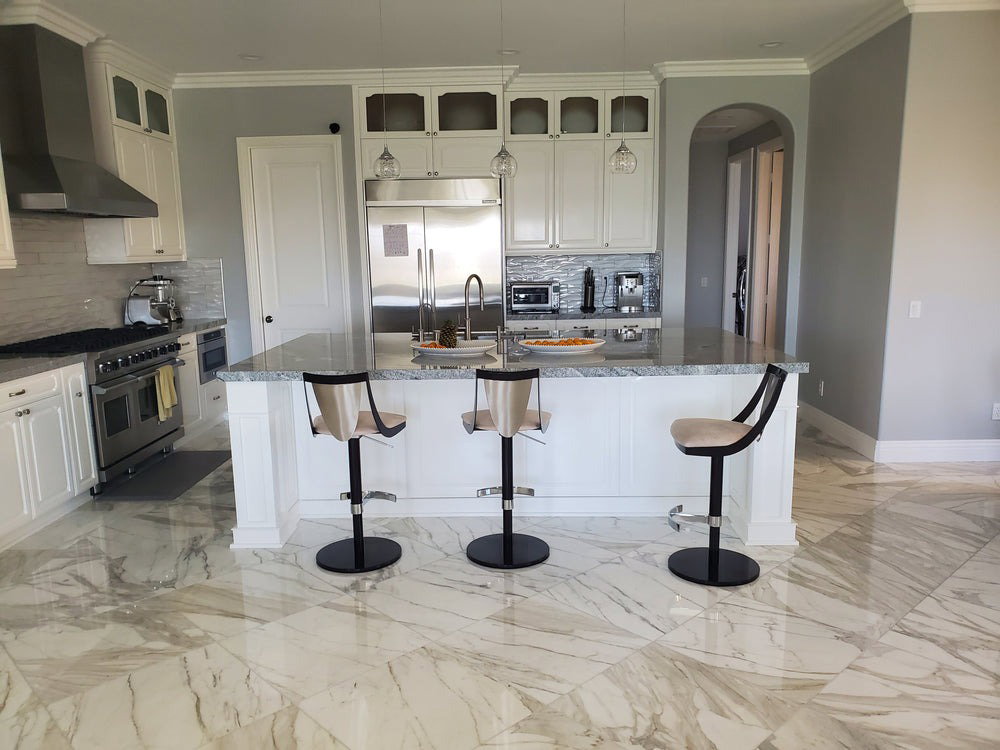
What we do
Why factory fill fails on schedule.
Travertine forms in hot springs, and the gas bubbles trapped during formation leave the stone full of natural voids. The quarry fills those voids with a cementitious paste, polishes the slab, and ships it. That paste is brittle and shrinks slightly as it cures.
After years of foot traffic, mopping, and thermal cycling, the fill cracks loose and pops out. Two-part epoxy bonds chemically to the stone, flexes, and outlasts the original paste.
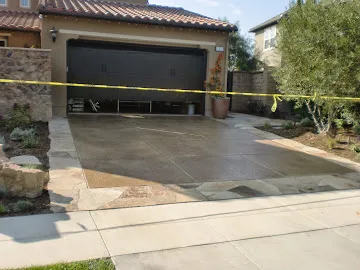
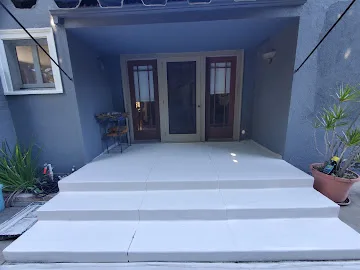
The difference
Color-matching is the part most installers get wrong.
Travertine variety matters. Classic Ivory, Noce, Walnut, Silver, and Scabos all read different colors, and the fill needs to disappear into the surrounding stone instead of sitting there as a dark dot.
We mix small batches of tinted epoxy on site and test against a clean section of your actual floor before committing. On highly varied stones we sometimes mix two or three slightly different fill tints across the same room.
Learn your surface
The better you understand the material, the better it holds up.
Quick reads on how hole filling actually works for orange county homes, before you spend money on the wrong fix.
Two-part epoxy fill, tinted on site.
UV-stable formulations for outdoor pavers.
Polymer-modified patch for concrete pop-outs.
Cementitious budget option available.
Ground flush with diamond pads.
Pairs with hone or polish in one visit.
How we work
A clear plan before the machines come out.
01
Walk and color-match
We walk the floor, count the voids, and pull a small sample of clean stone for color reference. Travertine variety matters: Ivory, Noce, Silver, and Walnut all need different fill tints. We mix and test against the actual floor before committing.
02
Pull old fill
Failed cementitious fill gets removed with carbide picks, small router bits, and air-vacuum cleanup. We do not chase good fill that is still bonded. We only replace what has actually failed, which keeps cost down and protects the surrounding stone edges.
03
Refill with color-matched epoxy
Voids get filled slightly proud with two-part epoxy tinted to match. For outdoor work we use UV-stable formulations. For high-wear residential floors we use a slightly flexible epoxy that handles thermal movement without cracking out again.
04
Grind flush and blend
Once cured, fills get ground flush with a fine diamond pad. If you are pairing fill with a polish or hone, we continue the abrasive progression across the whole floor and the fills disappear under the final finish.
Orange County homes
Hole filling for Orange County homes.
Travertine flooded into Orange County during the 2000s housing boom. Tracts in Coto de Caza, Ladera Ranch, Rancho Santa Margarita, and the older parts of Mission Viejo are now well past their original install, and the cement fill is failing on schedule. We fill more travertine in OC than any other restoration service.
Outdoor pavers around pool decks in Newport Beach, Anaheim Hills, and Yorba Linda need exterior-grade epoxy because pool chemicals and UV break down standard fill. Indoor travertine in Tustin and Irvine kitchens picks up grease and oil that darkens the cement fill until it reads black against the cream stone.
Questions
Straight answers before the estimate.
Why does the original factory fill keep failing?
Factory fill is a cementitious paste, basically a fine-grained mortar. It is brittle, it shrinks slightly as it cures, and it does not bond well to the smooth interior surfaces of the void. Add years of foot traffic, mopping, thermal cycling, and the occasional dropped frying pan, and the fill cracks loose. Two-part epoxy bonds chemically to the stone, flexes slightly, and outlasts the original cementitious fill.
Can I just fill the holes myself with caulk or a DIY kit?
You can, and it will look like a DIY job. The hardware-store kits use one or two generic colors that almost never match a real travertine slab, the fill sits proud or sunken because it is hard to grind flush without a variable-speed wet polisher, and most of the kits are urethane that yellows over time. For one bathroom void or a single tile we will tell you it is fine to try. For a whole floor it costs less long term to do it right the first time.
Do I need to fill holes in outdoor travertine pavers?
Yes, and faster than indoor floors. Open voids around pools fill with chlorinated water that breaks down whatever fill is in there, and they trap leaf debris that stains the stone. Outdoor fills need UV-stable epoxy with a flexibility additive so they handle thermal expansion. We use a different product line for exterior work than we use indoors, and the cure window is longer because we want to confirm full cure before pool reopening.
Should I fill holes only or fill plus polish?
Fill alone makes sense if the rest of your stone still looks good and you only need the voids closed. Fill plus polish makes sense on any floor that has lost its original sheen, has lippage between tiles, or has visible traffic wear. Doing them together costs less than doing them as separate visits, and the final finish hides every fill cleanly. Most of our travertine fill jobs in OC are bundled with a hone or polish.
Will the fill match my stone exactly?
Close enough that you have to look hard to find the fills, even on cream-colored Ivory travertine where mismatches show most. We mix tints on site against your actual stone, not against a generic chart. On highly varied stones like Scabos or Walnut we sometimes mix two or three slightly different fill tints across the same floor to chase the color variation in the stone itself.
How long does the fill last?
Color-matched epoxy fills are long-lasting on indoor floors with normal residential traffic. Outdoor poolside fills hold up well before UV starts to dull them. The fill itself does not pop out the way cementitious fill does, so when it does eventually need refresh it is usually a re-polish rather than a full re-fill.
What about pop-outs and bug holes in concrete?
Same approach with different materials. We chip out loose concrete around the void, treat any exposed aggregate, and refill with a polymer-modified cementitious patch tinted to match the slab. For polished concrete we use a clear or pigmented epoxy that we polish flush with the rest of the floor. Bug holes in newer concrete usually need a microtopping skim if there are a lot of them, otherwise they show as a constellation of dark spots even after fill.
Related
Other building restoration services in Orange County.
Building Restoration
Concrete Restoration
Concrete restoration in Orange County, California for crack repair, resurfacing, and structural restoration on driveways, patios, and pool decks. Stop damage before it spreads.
Building Restoration
Pool Deck Restoration
Pool deck restoration in Orange County, California for travertine, stone, and concrete pool decks. Cleaning, sealing, and coping restoration that brings the surface around your pool back without a tear-out.
Building Restoration
Construction cleanup
Construction cleanup in Orange County, California for new builds and remodels. Paint, grout haze, overspray, and finish damage cleared off the floor before move-in.
Have a hole filling project you are not sure about?
Send a photo. We will tell you what we see and whether it belongs on our schedule.