Concrete Contractor

Concrete Overlay Services in Orange County

Your concrete is structurally fine, it just looks tired. An overlay is a thin cementitious topping that bonds to the existing slab and gives you a brand new finished surface, troweled smooth, scored, or stamped to look like stone, tile, or polished concrete. No tear-out. Serving Newport Coast, Yorba Linda, Dana Point, and across Orange County.

CSLB #661604
45+ Years Experience
500+ OC Projects
Concrete Overlay in Orange County by The Floor Maintenance Company

Our Concrete Overlay Work in Orange County

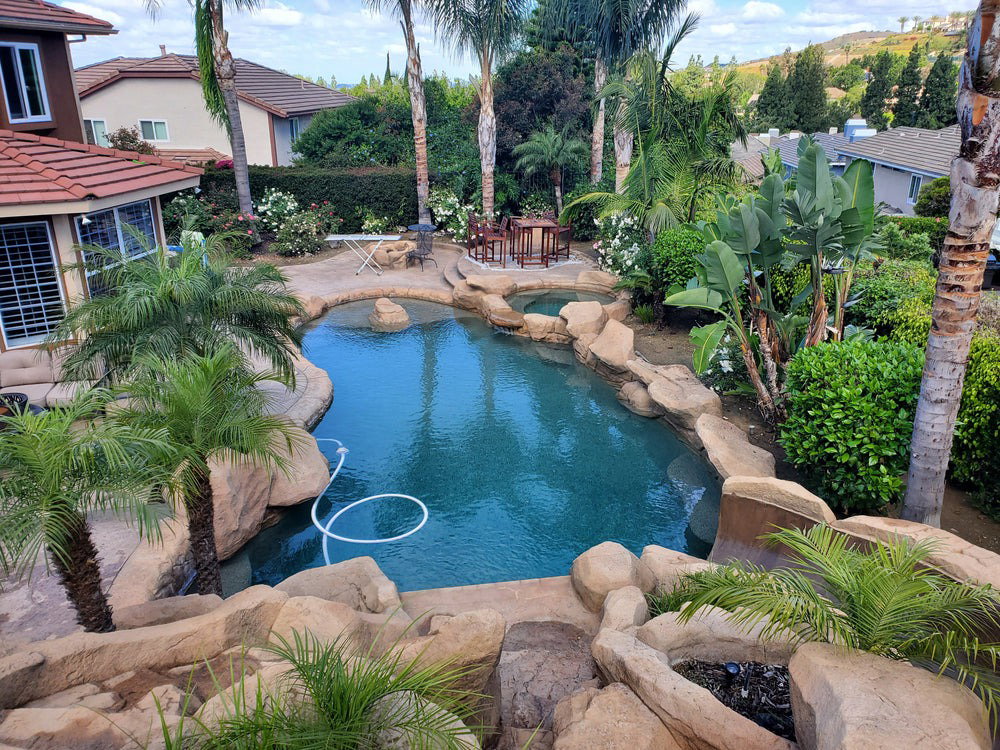
Stamped Flagstone Pool Deck before and after in Yorba Linda
Stamped Flagstone Pool Deck Yorba Linda
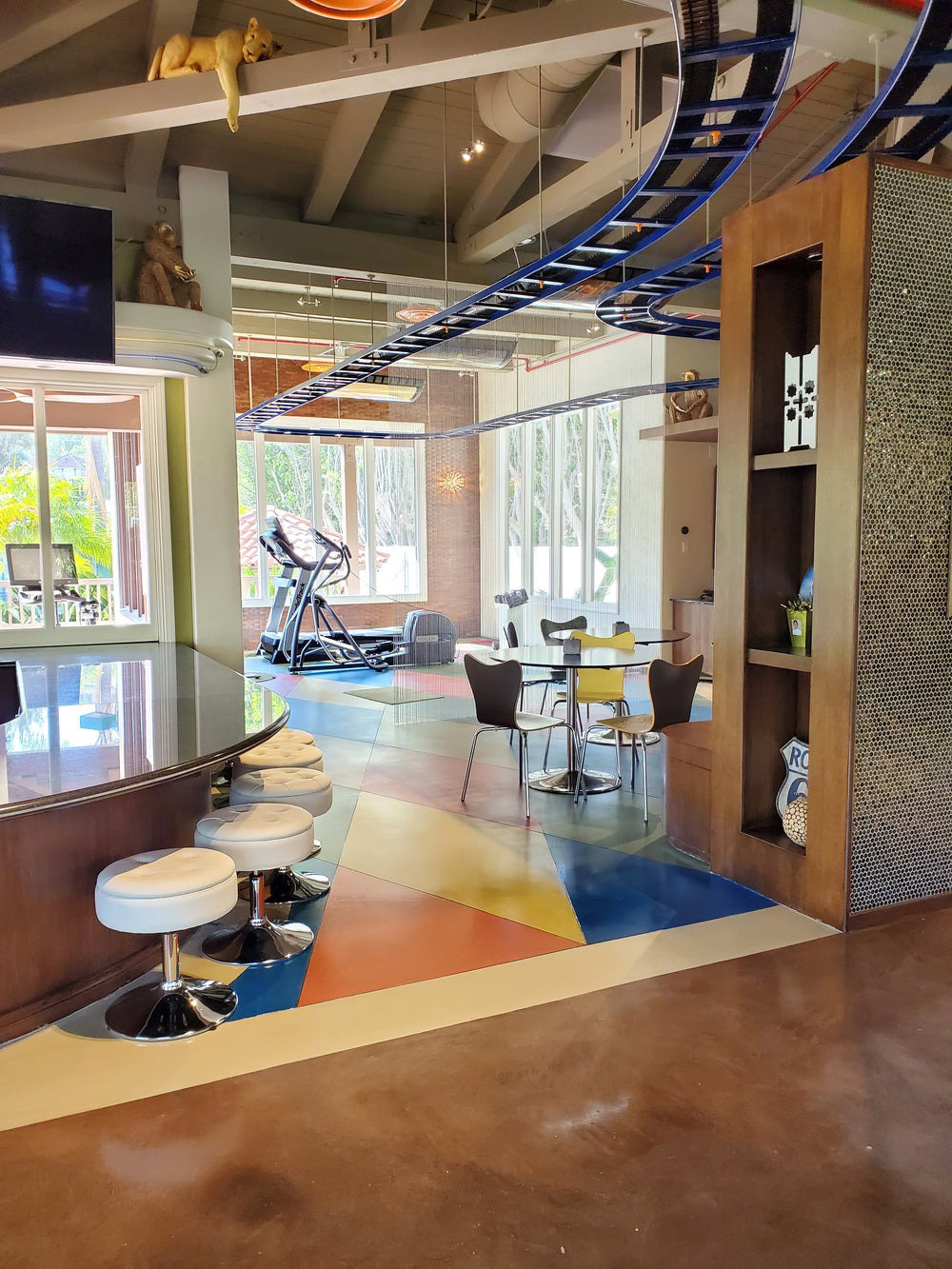
Microtopping Living Room Floor before and after in Newport Coast
Microtopping Living Room Floor Newport Coast
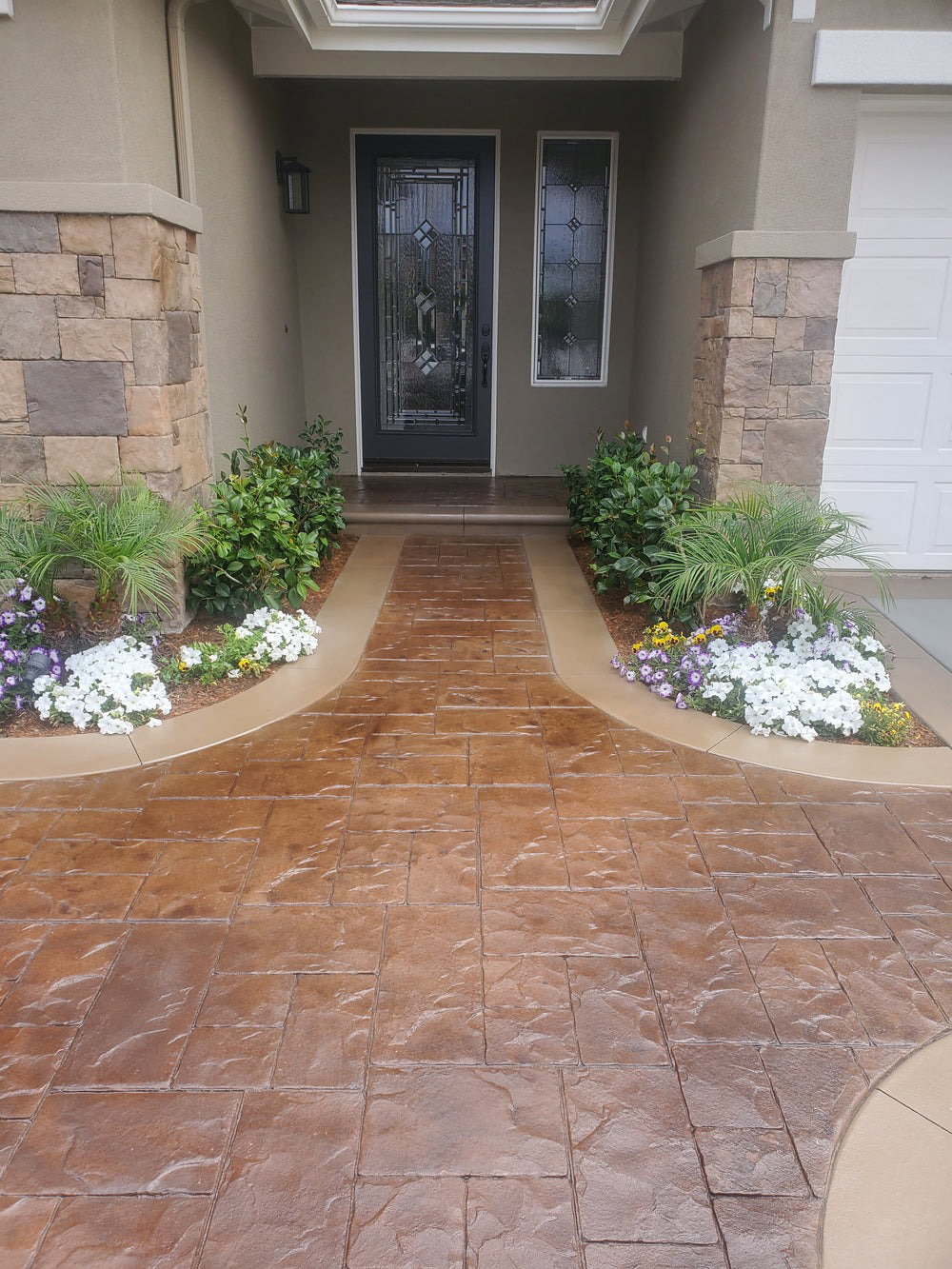
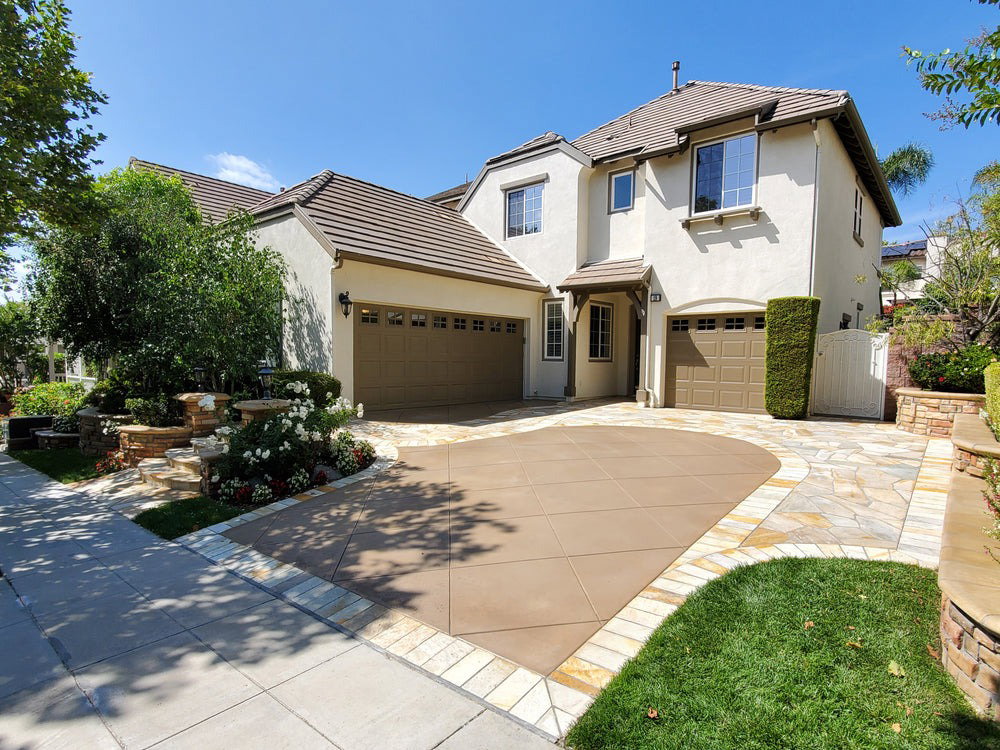
Driveway Overlay with Brick Border before and after in Anaheim Hills
Driveway Overlay with Brick Border Anaheim Hills

Concrete Overlay Options in Orange County

A concrete overlay is a polymer-modified cementitious topping applied over an existing slab. The polymers (usually acrylic or SBR) make the cement flexible enough to bond to old concrete without delaminating and thin enough to apply at 1/16 inch up to about 1/2 inch depending on the system. Microtoppings are the thinnest, often 1/16 to 1/8 inch, used for smooth color and texture. Self-leveling overlays pour out at 1/4 to 3/8 inch and find their own grade. Stampable overlays go down at 1/4 to 1/2 inch and get tooled while wet to look like flagstone, slate, brick, or wood plank. The difference between an overlay and a slab replacement comes down to substrate. If your concrete is cracked structurally, settled, or spalling from rebar corrosion, an overlay will not fix any of that and the same problem will telegraph through within a year. We grind, profile, repair the underlying concrete, and only then bond the overlay. Done that way, an overlay lasts as long as the slab under it. We install both interior and exterior overlay systems. Indoor projects are usually microtopping or self-leveling, finished smooth and either polished, stained, or sealed with a clear coat. Outdoor projects, mostly pool decks, patios, driveways, and entry walks, are stamped or knockdown-textured, integrally colored, and sealed with a UV-stable acrylic. We work with Sundek, Elite Crete, Increte, Ardex, and Mapei systems depending on what the job calls for.

Types of Concrete Overlay

Not every concrete overlay project needs the same finish. Here's how the common options compare so you can pick the right one for your space.

Microtopping Microtopping

Polymer-modified cement applied at 1/16 to 1/8 inch in two thin coats. Smooth, polishable, takes acid or water-based stain. The fix when you want polished concrete but the slab is too rough.

Pros

  • • Thinnest profile
  • • Polishable surface
  • • Custom color

Best For

  • • Living rooms
  • • Kitchens
  • • Retail floors
Self-Leveling Overlay Self-Leveling Overlay

Pumped or poured at 1/4 to 3/8 inch, finds its own grade, dries dead flat. The base for high-end interior polished or stained concrete over a damaged slab.

Pros

  • • Perfectly flat
  • • Hides slab damage
  • • Polish-ready

Best For

  • • Renovations
  • • Open floor plans
  • • Modern homes
Stamped Overlay Stamped Overlay

Quarter to half inch overlay tooled while wet to look like flagstone, slate, brick, cobblestone, or wood plank. Antique color and accent stains add depth.

Pros

  • • Stone look at fraction of cost
  • • Hundreds of patterns
  • • Bonds over old concrete

Best For

  • • Patios
  • • Pool decks
  • • Front entries
Scored and Stained Overlay Scored and Stained Overlay

Smooth microtopping cut with control joints to look like large-format tile or geometric panels, then stained for warmth and depth.

Pros

  • • Clean modern look
  • • Custom layouts
  • • Permanent color

Best For

  • • Courtyards
  • • Entryways
  • • Modern patios
Knockdown Texture Overlay Knockdown Texture Overlay

Sprayed cementitious overlay that gets knocked down with a trowel for a soft orange-peel texture. The classic cool-deck replacement for hot pool surrounds.

Pros

  • • Cool underfoot
  • • Anti-slip texture
  • • Hides slab flaws

Best For

  • • Pool decks
  • • Patios
  • • Walkways
Faux Stone Overlay Faux Stone Overlay

Hand-carved overlay finished to look like custom-cut flagstone or natural slate, with hand-applied antique colors and grout-line accents. Higher-end version of stamped work.

Pros

  • • One-of-a-kind look
  • • Hand-detailed
  • • Premium finish

Best For

  • • Front entries
  • • Outdoor kitchens
  • • Custom patios

Why Orange County Chooses The Floor Maintenance Company for Concrete Overlay

Pool deck overlays are the bulk of our outdoor work in Orange County. Coto de Caza, Dove Canyon, Anaheim Hills, North Tustin, and Yorba Linda all have a lot of 1990s and early 2000s pool decks where the original cool deck or Kool Deck has chalked off, cracked, and burned barefoot in the summer. A textured overlay with integral color and a fresh sealer takes those decks from unusable to looking new in about a week. Indoor microtopping is having a moment in Newport Beach, Laguna Beach, Corona del Mar, and the modern build-outs in the Great Park villages of Irvine. Homeowners want the look of polished concrete but their original slab is too rough, too patched, or too discolored to polish directly. We pour a self-leveling overlay over the existing slab, let it cure, then polish or stain it like a fresh pour. Same look, no demo. Driveways and front entries are a steady third bucket. The 1960s and 1970s tract neighborhoods in Anaheim, Fullerton, Garden Grove, and Costa Mesa have plenty of original driveways with surface scaling and discoloration but solid structure underneath. Stamped overlays mimicking flagstone or running bond brick are a popular fix because they hide the existing damage and add curb appeal without ripping out a working slab.

Our Concrete Overlay Process

What working with us actually looks like

  1. 1

    Design and sample meeting

    We bring physical color chips and small sample panels of texture and pattern options. You pick a base color, accent color (if stamped), and finish style before we ever touch your slab. We sketch out the joint layout for scored or stamped work.

  2. 2

    Slab prep and crack repair

    We grind the existing concrete to a CSP-3 profile, repair structural cracks with epoxy injection, fill spalls, and pressure-wash the surface. The overlay only bonds as well as the prep underneath, so this step gets full attention.

  3. 3

    Bond coat and overlay placement

    A polymer-modified bond coat goes on first. Then the overlay material is troweled, poured, sprayed, or pumped to thickness. For stamped work, we stamp into the wet material before it sets. For microtopping, we lay two thin coats with a sanding step between.

  4. 4

    Color and seal

    Acid stains, water-based dyes, or topical antiquing colors are applied to add depth. Two coats of UV-stable solvent or water-based acrylic sealer go on last. Outdoor work gets a non-slip additive in the final coat.

Ready to Get Started with Concrete Overlay?

Free on-site estimates. We'll come to you anywhere in Orange County.

Concrete Overlay FAQ

Q: How long does an overlay last?

Properly installed and resealed every 2 to 4 years, an overlay lasts the life of the underlying slab, typically 15 to 25 years for outdoor work and indefinitely indoors. The sealer is the wear layer. When it dulls or starts to wear thin in traffic lanes, we strip and reapply, which costs a fraction of a new install.

Q: Will the overlay crack?

If the slab below it cracks again, yes, the overlay will eventually mirror that crack. That is why we cut control joints in the overlay over existing joints in the concrete and use crack-isolation membranes over hairline cracks that are not actively moving. New cracks the slab develops after install are not the overlay's fault, they are the substrate moving. We do not warranty cosmetic cracks for that reason, but the bond and the finish itself are warranted.

Q: Can you overlay over an existing pool deck or cool deck?

Yes. Most cool deck and Kool Deck surfaces from the 80s and 90s are polymer-modified toppings themselves, and we can grind them off or, if they are still well-bonded, scarify and overlay right over them. We test the bond first by chipping a small area. If the old deck pops loose easily, it has to come off before we overlay. If it is solid, we can layer over it.

Q: How is an overlay different from resurfacing?

Overlap a lot, but overlays are usually thicker and more decorative. Resurfacing is the catch-all term for putting any new layer over old concrete, often a thin spray-on coat for color uniformity. An overlay specifically refers to a polymer-modified cementitious topping applied at 1/16 to 1/2 inch with a structural bond. If you want stamped patterns, scored designs, or a polishable surface, you want an overlay, not a basic resurfacing.

Q: What about hot Orange County summers, will the overlay handle the sun?

Yes, with the right sealer. UV-stable acrylic sealers hold their color for 2 to 4 years before they need a maintenance coat. We avoid darker integral colors on south-facing pool decks because they get genuinely hot underfoot in July and August. Lighter tans, grays, and creams stay cool enough to walk barefoot. We will steer you to a palette that works for your exposure.

Q: Can I walk on it the same day?

Light foot traffic in 24 hours, normal use in 48 to 72 hours, vehicle traffic on driveways at 7 days. Sealer cure adds another 24 to 48 hours before pool water, sprinklers, or rain should hit the surface. We give you a written cure schedule when we leave.

Q: Is an overlay slippery when wet?

Smooth microtopping can be slick when wet, which is why we add a fine grit aggregate (Shark Grip or similar) to the final sealer coat on any pool deck, patio, or wet-area floor. Stamped and textured overlays have natural slip resistance from the pattern. We always finish exterior work with a non-slip additive, that is not optional.
Free Estimates

Get a Free Concrete Overlay Estimate

No pressure. No obligation. Just an honest look at your floors and what's possible.