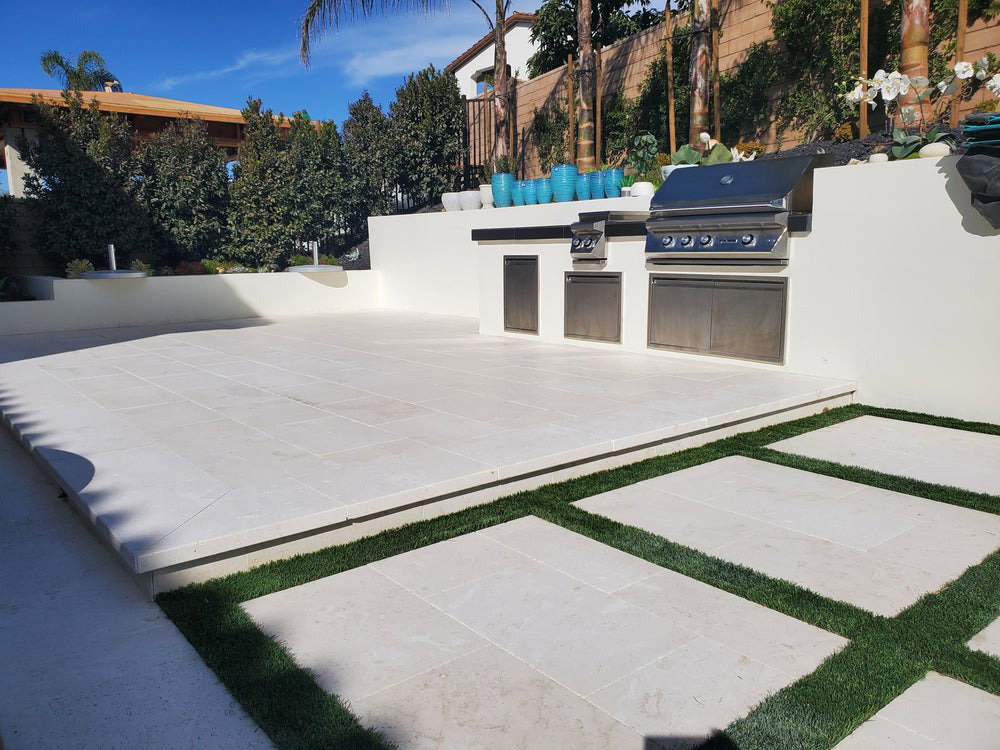
Orange County natural stone polishing
Floor Polishing Services and Natural Stone Polishing in Orange County, California
Certified for this work
Natural stone polishing covers the work outside our marble, granite, and travertine specialties. Limestone, slate, onyx, terrazzo, soapstone, flagstone, quartzite. We work all of them in homes across Orange County.
Each stone has its own hardness, porosity, and chemistry. The wrong diamond on the wrong stone causes damage you cannot wipe off.
years in construction and surface work
Google rating from local customers
California contractor license
Google reviews
Trust has to show up before the estimate.
5.0
Google rating from local customers
17
Google reviews and counting
Victoria
Orange County
★★★★★
"Our kitchen counter was pitted from water damage. Vince and Derrick fixed the granite and sealed everything at a reasonable price."
Google reviewJohn D.
Orange County
★★★★★
"Concrete patio, tile walkways, and driveway. Cleaning, patching, recoloring. Three days, and they aced it all."
Google reviewJudi Harris
Orange County
★★★★★
"Honest, hard working. Vince and Gio were punctual, neat, and surpassed our expectations."
Google reviewFrank Warren
Laguna Niguel
★★★★★
"Driveway was getting cloudy and chipping. Vince came out multiple times and even made a video showing me how to maintain it."
Google reviewMike Porter
Orange County
★★★★★
"Competitive quote, owner was hands-on the entire time, fixed every detail we pointed out."
Google reviewLaurie C.
Orange County
★★★★★
"Concrete restored and stained. Vince and his crew were professional, reliable, and always on time."
Google reviewMission Viejo location
Natural Stone Polishing from a local Orange County crew.
We are based at 23881 Via Fabricante, Suite 521 in Mission Viejo. Most natural stone polishing work happens nearby in Lake Forest, Laguna Niguel, Rancho Santa Margarita, Irvine, Newport Beach, San Clemente, Tustin, and homes across Orange County.
Read the Google reviews on this page before you decide who should look at your surface.
What we do
Different stones, different processes.
Limestone is calcium carbonate like marble but softer and more porous, so we use a finer-grit progression and stop at a satin hone. Slate has a natural cleft we deep clean and color enhance instead of grind.
Onyx is brittle and translucent, so it gets ultra-fine grits and hand work on the edges. Terrazzo polishes like a hybrid of concrete and marble. Quartzite holds a careful five-step diamond polish.
The difference
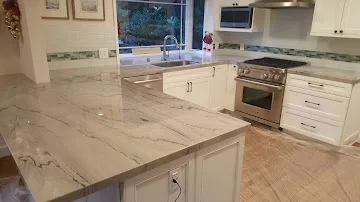
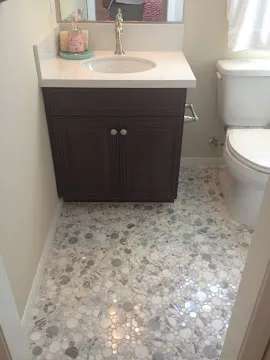
Limestone, slate, onyx, terrazzo, and the rest.
We identify the stone first, on site. Many homeowners are told marble and have limestone, or told granite and have quartzite.
A test patch in a low-visibility spot shows the achievable finish before we commit to the whole floor.
Learn your surface
The better you understand the material, the better it holds up.
Quick reads on how natural stone polishing actually works for orange county homes, before you spend money on the wrong fix.
Limestone hone in foyers and great rooms
Slate clean and color enhance
Onyx hand polish on feature walls
Terrazzo grind, densify, and polish
Quartzite five-step diamond polish
Soapstone mineral oil refresh
How we work
A clear plan before the machines come out.
01
Stone identification
We confirm what you actually have. Many homeowners are told 'marble' and it's limestone, or 'granite' and it's quartzite. The wrong assumption means the wrong diamonds and the wrong sealer. We test with a few drops of water, a scratch test in a hidden corner, and visual inspection of the grain.
02
Test patch and quote
A 1x1 or 2x2 test area in a low-visibility spot shows you the achievable finish. Some stones polish to a high gloss, some only hone, some require enhancement instead of polish. The test removes the guesswork before we commit to the whole floor.
03
Stone-specific refinish
Diamond progression calibrated to the stone's hardness and porosity. Limestone gets a softer touch than marble. Onyx gets hand-polishing on the edges. Terrazzo gets a densifier between grits. Slate gets cleaned and enhanced, not ground. We don't use a generic process.
04
Match the right sealer
Porous stones (limestone, sandstone, flagstone) get an impregnating sealer rated for high absorption. Dense stones (quartzite, soapstone) get a lighter penetrating sealer or, for soapstone, mineral oil only. We tell you which to use for refresh coats and how often.
Orange County homes
Natural stone polishing for Orange County luxury and vintage homes.
Limestone shows up in Pelican Hill, Crystal Cove, Newport Coast, and Shady Canyon. Vintage terrazzo lives in Costa Mesa, Anaheim, Fullerton, and older Newport Beach builds. Onyx and slate cluster in Laguna Beach and Coto de Caza.
Soapstone counters are a niche in modern Irvine and Tustin remodels. We identify what you have on the walk and quote accordingly.
Questions
Straight answers before the estimate.
Why does limestone need different treatment than marble if both are calcium carbonate?
Limestone is softer and more porous than marble. The same diamond pad that polishes marble to a mirror will burn limestone or expose voids in it. We use a finer-grit progression with less aggressive abrasive, stop at a satin hone instead of full polish, and use a higher-absorption sealer. Limestone also etches faster than marble, so a hone is more forgiving long-term than a polish.
Can you polish slate?
Not in the way most people mean. Slate has a natural cleft texture that gives it character, and grinding it smooth destroys that. What we do for slate is a deep enzymatic clean to pull dirt and old wax out of the cleft, then color enhancement with a penetrating enhancer like Aqua Mix Enhancer Pro to deepen the natural blacks, blues, and greens. Then a topical sealer for protection. The result looks freshly installed.
Is terrazzo worth restoring or should we just replace it?
Restore it almost always. Vintage terrazzo from the 1950s and 1960s is irreplaceable. The marble chip aggregate, the original color matrix, and the patina take time to develop. We grind, densify, and polish to expose fresh aggregate and bring back the original gloss. Repair costs run a fraction of replacement, and you keep the character of the home.
How do you restore onyx without breaking it?
Slow and by hand. Onyx is brittle and translucent, so we use light passes with ultra-fine diamonds (mostly 800, 1500, 3000) and finish with cerium oxide compound. Edges are hand-polished with rubber-backed pads. We never use heavy machines on onyx. Most onyx jobs are smaller, like a feature wall or a bar top, and we treat them more like fine cabinetry than flooring.
What about soapstone counters?
Soapstone is soft enough to scratch with a fingernail and doesn't need sealer. We polish lightly with very fine pads if there are deep scratches, then apply mineral oil to deepen the color. The oil refreshes every few weeks for the first year, then less often as the stone naturally develops a patina. Soapstone is the most low-maintenance stone we work with.
How do I know what kind of stone I have?
Send us a few photos and we'll usually identify it from the grain pattern, color, and surface character. If we can't tell from photos, we identify on site with a hardness test and a drop of dilute acid in a hidden corner. The acid bubbles on calcium carbonate (marble, limestone, travertine, onyx) and does nothing on silica-based stones (granite, quartzite, slate). Five-minute test.
Will polishing remove dark spots and stains?
Most surface dullness and traffic wear comes out with the polishing pass. Deep stains from oil, rust, or organic material need a poultice applied first, which sits 24 to 48 hours and pulls the stain up out of the pores. We add poultice work to the quote when we see staining at the walk.
Related
Other floor sanding & polishing services in Orange County.
Floor Sanding & Polishing
Concrete Polishing
Concrete polishing in Orange County, California for garages, homes, retail floors, offices, and warehouses. Diamond-honed concrete with a finish that holds up to real use.
Floor Sanding & Polishing
Marble Polishing
Marble polishing in Orange County, California for floors, counters, showers, and stone surfaces. Cleaning, honing, polishing, and sealing that bring marble back.
Floor Sanding & Polishing
Granite Polishing
Granite polishing in Orange County, California for kitchen counters, bath vanities, and stone floors. Restore shine and protect the surface against daily use.
Floor Sanding & Polishing
Travertine Polishing
Travertine polishing in Orange County, California for floors, showers, patios, and pool decks. Honing, cleaning, hole filling, and sealing for stone that takes daily use.
Floor Sanding & Polishing
Countertop Polishing
Countertop polishing in Orange County, California for granite, marble, quartzite, travertine, and natural stone counters. Refresh counters without replacement.
Floor Sanding & Polishing
Countertop Color Staining
Countertop color staining in Orange County, California for kitchen and bath counters. Color the surface and seal it without the cost of replacement.
Floor Sanding & Polishing
Satin Finish
Satin finish floors in Orange County, California for marble, concrete, and natural stone. A soft sheen that reads finished without the slippery look of full gloss.
Have a natural stone polishing project you are not sure about?
Send a photo. We will tell you what we see and whether it belongs on our schedule.