Q: What's the difference between honed, satin, and polished?
Honed is the matte stopping point at 100 to 200 grit. The surface is flat and smooth but has zero sheen, like a chalkboard. Satin is the next step up at 400 grit, with a soft low-sheen glow that catches side light. Semi-gloss is 800 grit with clearer overhead reflection. High-gloss is 1500 to 3000 grit, a true mirror. Satin sits in the most practical zone for residential floors because it looks finished without showing every footprint.
Q: Does satin show fewer scratches and footprints than high-gloss?
Yes, significantly. The reason is light reflection. High-gloss surfaces reflect light at sharp angles, which makes any scratch, footprint, or scuff visible by contrast. Satin diffuses reflected light, so the same scratch is much harder to see. For homes with kids, dogs, sandy shoes, or just normal life, satin is the lower-stress choice. It still cleans the same way, it just doesn't broadcast every imperfection.
Q: Is satin polished concrete slippery when wet?
Less slippery than high-gloss polished concrete and less slippery than ceramic tile. The 400-grit surface still has microtexture you can feel with bare feet, which gives traction. For kitchens, bathrooms, mudrooms, and outdoor satin work we can add an anti-slip topical conditioner that increases friction further without changing the look. Pure water on satin concrete is fine for most household areas.
Q: Will the satin finish wear off over time?
The finish itself is the concrete, not a coating, so there's nothing to peel or wear away. The densifier and stain guard on top do wear and need refreshing. In a typical OC home we recommend a re-burnish every 3 to 5 years to refresh the satin sheen, plus a stain guard reapplication every 1 to 2 years in high-traffic areas. The actual polish geometry of the floor lasts decades.
Q: Can satin finish go on a stained concrete floor?
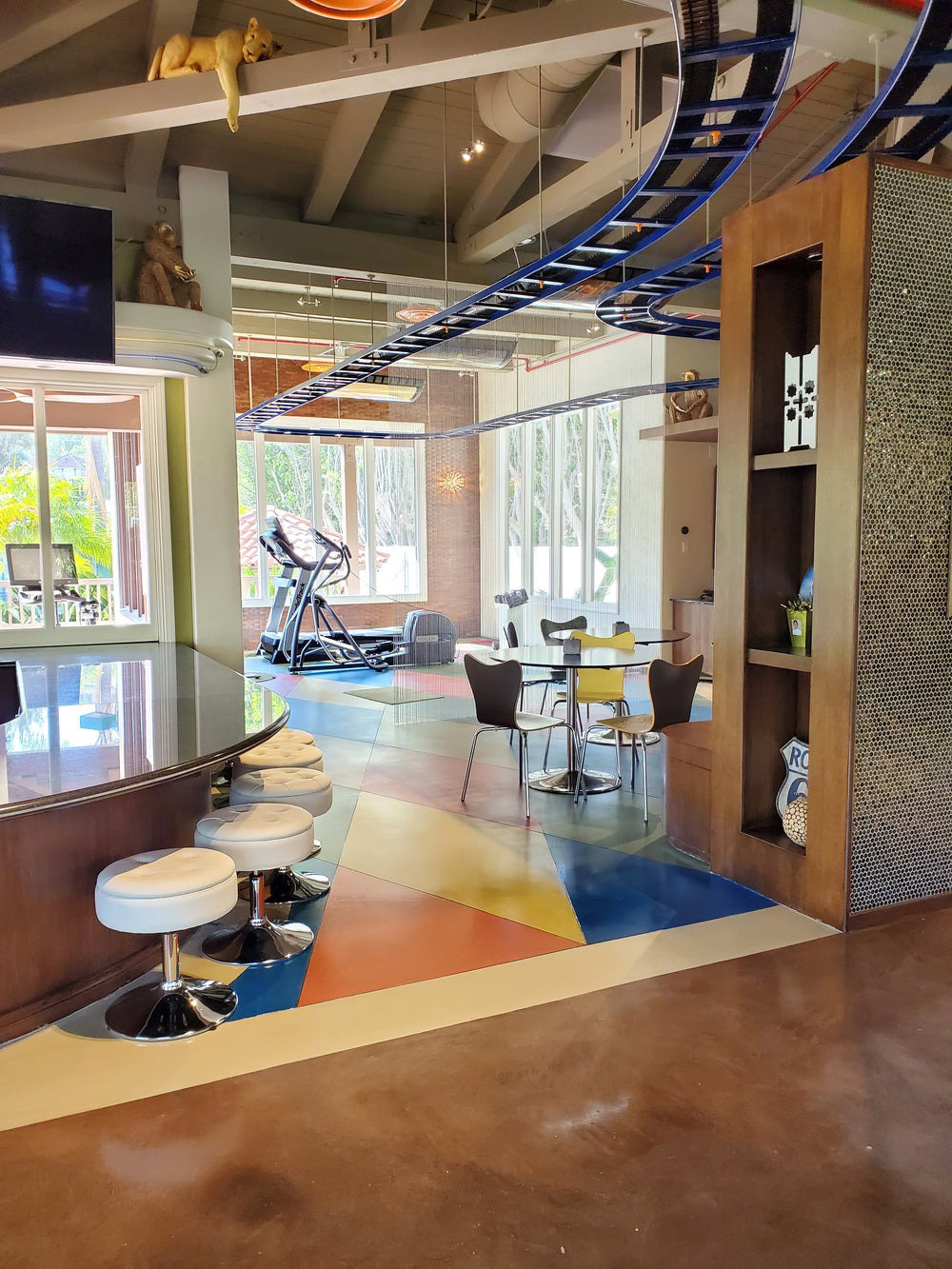
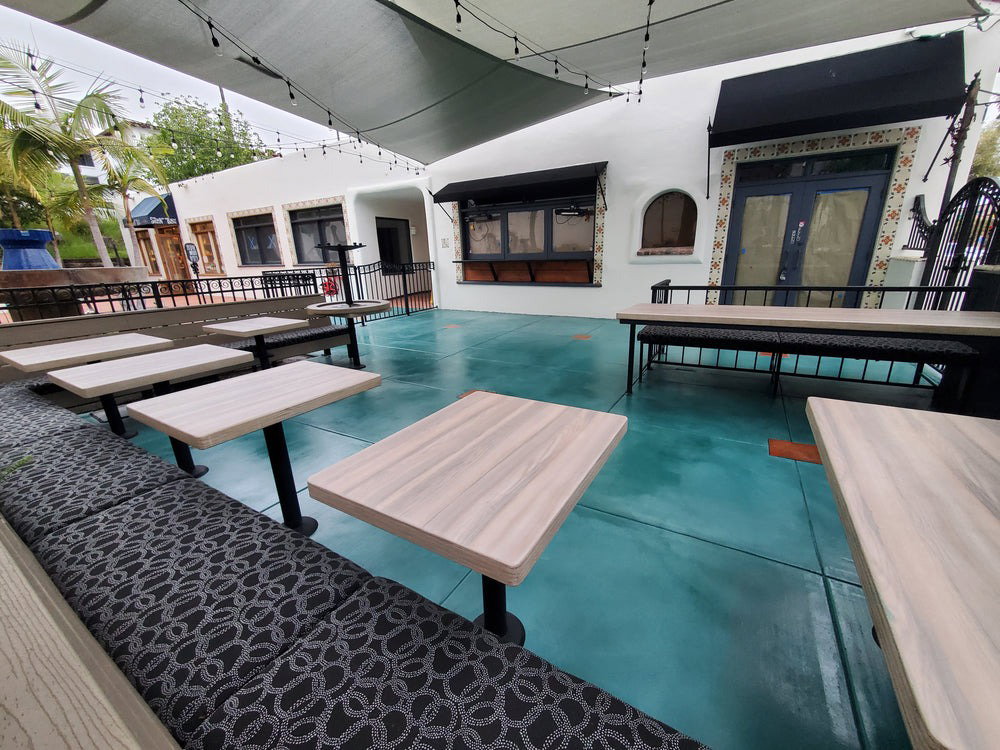
Yes, and it's one of the more popular combinations we install. The stain (acid or water-based dye) goes down first during the polishing process, color penetrates the slab, then we polish to satin. The result is a colored floor with permanent finish (no sealer to peel) and a soft sheen. Common in modern OC residential builds in Irvine and Portola Springs.
Q: How long does the project take and can I be in the house?
A typical 600 square foot room is 2 to 3 days. Day one is grinding and densifier. Day two is refinement up through the grits. Day three is stain guard and burnish. Our equipment is HEPA-vacuumed, so dust is minimal compared to old-school dry grinding. You can usually stay in the house if we're working a contained area. Light foot traffic the same day as final polish, full use 24 hours after stain guard.
 Satin on Polished Concrete